Choosing how to learn first aid and CPR is not a theoretical question. It determines what you in fact do when a coworker falls down in the lunchroom or a child starts choking at a birthday celebration celebration. For many individuals, the genuine predicament is not whether to learn first aid, yet just how: a fast first aid course on website, an express first aid course blended with on the internet knowing, or an online just program you can end up on your laptop computer in an evening.
I have educated hundreds of people in first aid and CPR in workplaces, child care centres, health clubs and area teams. I have likewise reviewed even more online just courses than I like admit. The difference in efficiency throughout actual situations is evident within minutes. The ideal style for you depends upon your goals, your legal responsibilities, and exactly how honest you intend to have to do with your confidence in an emergency.
This post goes through those compromise meticulously, particularly for individuals looking for fast first aid courses, express cpr options, or a https://rentry.co/coi3makb fast first aid course near me that still satisfies work environment or child care requirements.

What "fast" really implies in first aid training
When people look for fast first aid, fast cpr, or fast certification, they usually mean one of three points:
Short overall course time, ideally within a solitary day. Minimal time far from work or family. The quickest path to a legitimate first aid certificate.Those are all reasonable wishes. The majority of adults do not have the high-end of multi day first aid and cpr training classes. The industry has reacted with fast first aid training formats: express first aid courses that compress the one-on-one component, fast cpr refresher course choices, and blended versions where you do theory online and a functional session in person.
The crucial difference is not fast versus sluggish. It is fast with proper hands on method, versus fast with video clip only. Both can call themselves a first aid course. Only one genuinely prepares you to react when an individual is grey, not taking a breath properly, and your own adrenaline is spiking.
When I talk about fast first aid courses that still function, I mean training that reduces the class time without stripping out the tactile skills: chest compressions, rollovers into the healing setting, inhaler help, EpiPen practice, and fundamental injury management. That is very various from a totally online just first aid course where the only point you push is the "Following" button.
What online just first aid and CPR courses actually teach
Online only first aid training and cpr courses differ a whole lot in high quality, but they share common traits.
They educate acknowledgment and concept well. You can learn symptoms and signs of a stroke, how to recognize an asthma flare, or the steps of cardiopulmonary resuscitation: look for risk, check reaction, open the respiratory tract, check breathing, start compressions.
Where they battle is translation into efficiency under pressure.
If all you want is an introduction to first aid and cpr, or a refresher on the sequence of actions after you have currently been trained, an online program can be useful. It is specifically useful for:
- Revising guidelines after changes, such as compression price or standard life support sequences. Learning history information for fap first aid in workplaces where an in person refresher is currently scheduled. Giving member of the family a shared language prior to you attend a functional course together.
However, when organisations count only on online first aid and cpr course web content to accredit personnel, you see the spaces immediately. In a drill, people recall that they need to "tilt the head back" yet hesitate to touch the client. They understand they need to "push set" on the upper body, however their compressions are either so superficial they barely relocate the sternum approximately wild that their arms exhaustion in thirty seconds.
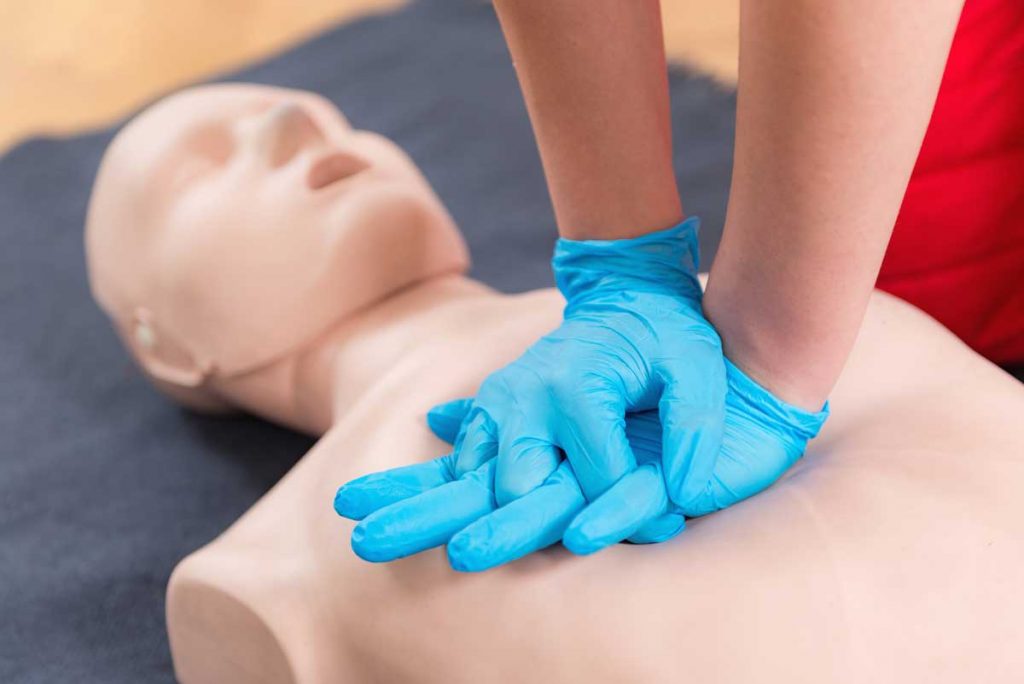
You can not really feel right compression depth with a display. You can not experience the resistance of a kid sized manikin unless you in fact kneel beside it, change your hand setting, and obtain training in actual time.
Online just first aid courses likewise can not evaluate your capability to manage a scene with bystanders, phones calling, and ecological risks. They can offer a clean scenario with several choice feedbacks. Reality rarely looks like that.
Fast, express, and combined: where they excel
Fast first aid courses and express first aid training have a poor track record in some circles, as if "fast" instantly suggests "dodgy". That is not always fair.
Well created express first aid courses utilize a blended style: online concept finished prior to the course date, integrated with a lean, extremely focused in person session. Instead of costs class time checking out slides concerning shock or burns, the group arrives with that history already covered. The trainer can then designate the majority of the face to face time to scenarios, technique, debrief, and assessment.
The ideal fast first aid training programs that I have supplied or audited share a few features:
They set clear pre course job assumptions. Participants know they have to finish an online module or workbook beforehand, generally taking 2 to 4 hours. It covers definitions, legal responsibilities, infection control, and fundamental anatomy.
The face to face session is compact yet extreme. For a standard first aid and cpr course, this could be a 4 to 5 hour block, sometimes shorter for a fast cpr correspondence course. You relocate between manikins, companion work, bandaging, role play, and Q&A. There is very little resting still.
The ratio of trainer to individuals remains affordable. As soon as you get beyond concerning 12 participants per trainer, the high quality of comments on CPR strategy, risk-free training, and respiratory tract monitoring goes down promptly, especially in an express first aid course.
Assessment concentrates on abilities, not just recall. You are observed replying to scenarios: a subconscious breathing casualty, a non breathing casualty needing CPR, a blood loss injury, an anaphylaxis circumstance with a vehicle injector.
This design functions specifically well for individuals that already have some direct exposure to first aid. For instance, a health and fitness teacher doing an express cpr course yearly, or a child care teacher renewing express child care first aid, picks up where they left off and hones their technique.
The risk appears when companies reduced corners: no pre job, marginal guidance, 5 people on one manikin, and an instructor who rushes with each subject since they should finish the express first aid training in 2 hours. That is not fast training. That is box ticking.
Why hands on still matters, even with best theory
I have actually had individuals state the entire DRSABCD or chain of survival series from memory, after that freeze the minute I inquire to show it on a manikin. The void in between knowing and doing is where hands on first aid courses gain their keep.
There are specific minutes that nearly nobody solves the first time without feedback:
Opening the respiratory tract in an unconscious adult without over expanding the neck.
Finding the right hand position for compressions on an infant.
Compressing to the best deepness and rate on a grown-up manikin without "jumping" or leaning on the chest.
Rolling a bigger casualty into the recuperation position as a smaller sized rescuer without turning the spine.
Coordinating breaths with compressions in a first aid and cpr course, especially when you fear or breathless yourself.
These are skills you feel as long as you see. A trainer can put their hands lightly over your own, readjust the stress, and say, "Feeling that resistance? That is about right." No online just cpr training can reproduce that physical guidance.
Another neglected factor is psychological preparedness. During live first aid training, also in a fast first aid course, you practise speaking out loud:
"I am checking for risk."
"You, call a rescue."
"I am beginning compressions currently."
The very first time someone hears their very own voice offer solid instructions in a substitute emergency, you see their shoulders correct the alignment of. They stop trying to find authorization and start acting. That change is practically difficult to attain via a solo online module.
Compliance, industry needs, and what "counts"
For individuals, the question is typically "What will in fact make me proficient?" For organisations, it swiftly comes to be "What does the legislation or our regulator call for from first aid and cpr training classes?"
Requirements vary by territory and field, however a few patterns are consistent.
Many office safety and security regulators expect first aid training to consist of a practical element. A simply online only first aid course may not please your workplace's commitments, even if it issues a first aid certificate. Insurance firms and auditors increasingly examine not simply whether certifications exist, but whether the training satisfied acknowledged standards.
In childcare and early childhood education, bench is higher once more. Express child care first aid courses are typically approved only when they are provided by recognized carriers and consist of hands on demo of abilities: infant and youngster CPR, monitoring of asthma and anaphylaxis, and emergency responses for common childhood injuries. Express child care first aid training that is online just hardly ever fulfills these standards.
If your role involves aquatic guidance, sports mentoring, or safety, you might locate that a fast cpr course serves for refresher training, but only if your preliminary certification was acquired face to face. Reviewing the fine print issues. A fast first aid course near me that advertises "totally online and instantaneous" could satisfy no regulatory authority whatsoever, also if it does release a pdf certificate.

When unsure, check three points: your regional work environment health and safety authority, your sector regulator or association, and your organisation's insurance provider. They often define whether mixed and express first aid courses are acceptable, and whether online just training can ever stand alone.
Where online only shines
Purely online first aid and cpr courses are not worthless. They are merely poorly suited as the single method of training if you in fact expect somebody to do CPR or manage serious incidents.
There are scenarios where online first aid training adds real value:
Pre knowing prior to a fast first aid training session. Participants show up with common vocabulary and fundamental understanding, prepared to make use of the personally time for method as opposed to lectures.
Short cpr training refresher courses between formal recertification. Watching a premium quality compressions presentation every few months assists preserve muscular tissue memory, especially when integrated with a straightforward home technique manikin.
Awareness raising in large, spread organisations. If you have thousands of personnel throughout several websites, an online just first aid course can raise baseline knowledge prior to you determine and educate marked very first aiders extra deeply.
Non -responder functions who merely need to identify red flags. For example, workplace staff that are not assigned very first aiders can still find out to recognise stroke indicators or heart attack symptoms and mobilize aid promptly.
People that are housebound or in extremely remote areas, where going to personally first aid courses is not practical in the brief term.
In those contexts, an on the internet program functions as a bridge, not the destination. It must never be misinterpreted for full skills in life conserving skills.
Comparing fast in person, mixed, and online only
When you remove marketing language, the majority of first aid and cpr courses fall into among three models.
Traditional personally courses run all concept and technique in a classroom. They are extensive, familiar, and less complicated for some learners that battle online. The drawback is time: a complete first aid and cpr course can take 6 to 8 hours, in some cases topped 2 sessions. For local business or change based offices, that can be difficult to schedule.
Blended and express first aid courses front tons theory online and press the on website training to a half day or less. Done well, they maintain the vital functional work while decreasing disruption. A fast cpr correspondence course utilizing this style can be completed in one or two hours of online job plus 60 to 90 minutes encounter to face.
Online just courses do everything through a screen. They are adaptable, low-cost, and practical. That makes them appealing to people looking for a fast first aid certificate without leaving home. It also makes them risky when organisations mistake comfort for capability.
From years of seeing people do, my view is uncomplicated: for first time learners, a fast first aid course ought to never be online only. At minimum, a brief, well structured face to face or live virtual useful session is essential. For knowledgeable -responders who are rejuvenating skills annually and practising consistently, on the internet cpr training can sustain, but not change, hands on work.
Special instance: childcare and paediatric initial aid
Parents and child care instructors usually ask if express child care first aid is "enough". Right here the sort of occurrence changes, and so does the psychological load.
Most severe paediatric emergency situations include choking, breathing troubles, allergic reactions, seizures, or head injuries. The methods are much more fragile than grown-up first aid. Upper body compressions on a baby, as an example, use two fingers or two thumbs, with considerably much less deepness. The margin for error is smaller.
During express child care first aid courses, I pay particular attention to:
Hand placement and depth for baby and youngster CPR.
Clearing an obstructed respiratory tract in a mindful youngster without striking as well hard.
Safe use EpiPens and asthma inhalers in anxious or struggling children.
Managing several kids while one is unhealthy, particularly in solo instructor scenarios.
Communicating with parents and emergency solutions clearly and calmly.
You can discuss these ideas in an on the internet module, yet you can not simulate the sensation of putting 2 fingers on a manikin's small sternum and seeing the chest compress the right amount. Nor can you practice de escalating worried parents with a test screen.
For that factor, I think about child care a non negotiable location for combined or face to face express child care first aid training. Online only needs to be scheduled for acting refresher courses or supporting learning, not as the sole training method.
How to choose the best course format for you or your team
There is no single finest format for every single person or organisation. The much better concern is: what combination of rate, benefit, and deepness offers you real life capability, not just a certificate?
Here a short checklist assists cut through marketing language and concentrate your decision.
Quick list for assessing fast first aid and CPR options
- Check if the course includes a real-time useful part, either in person or actual time virtual, with assessment of your skills. Confirm that the company and certain first aid course or cpr course meet the demands of your workplace regulatory authority or sector body. Ask about fitness instructor to trainee ratio, number of manikins, and just how much time is allocated to hands on CPR, healing position, and scenario practice. Look for combined or express first aid courses that need significant pre job, not simply a ten min quiz, so the personally time can concentrate on practice. Be wary of any type of fast first aid course that guarantees full certification in under an hour without any real-time trainer interaction at all.
If a carrier can not respond to these questions clearly, or becomes obscure when you request information, deal with that as a warning sign. A first aid certificate is only as useful as the skills behind it.
Making feeling of "fast" without reducing corners
Speed is not the enemy. Lost time is.
I have actually endured long, conventional first aid courses where individuals spent hours replicating terms from the board and only touched a manikin once. I have additionally run express first aid training sessions in under 5 hours where every individual completed several rounds of CPR, handled a minimum of three different scenarios, and left literally worn out yet confident.
The difference lies in style and intent.
When you examine alternatives for fast first aid or fast cpr, focus on what you will actually do throughout the course. Checking out, watching, or paying attention are insufficient for efficiency skills. You require repeating, adjustment, and a little stress and anxiety. You require to practise until your hands recognize what to do faster than your fear can interrupt.
Used well, online understanding can eliminate concept so that your fast first aid training session becomes a high value method laboratory. Mistreated, online only first aid courses create an incorrect sense of security that no one discovers up until a real emergency. Already, it is far too late to click "Replay".
If you are picking for yourself, aim for a minimum of one considerable hands on first aid and cpr course, then make use of online and express cpr courses to remain sharp. If you are in charge of a group, design a turning: first full first aid training personally, after that fast cpr correspondence course sessions annually, supported by on the internet modification modules.
That blend respects your time, pleases most regulatory structures, and, most significantly, leaves you with individuals who do not simply hold certifications, yet understand what to do when somebody's life depends upon it.
Final ideas: matching method to responsibility
Not everybody requires the very same deepness of training. A home consultant might sensibly choose an online just first aid course to gain fundamental understanding till they can join an in person program. A busy parent could begin with a short express cpr course prior to committing to a complete day first aid and cpr course. That is great, as long as you stay honest concerning what those courses prepare you to do.
On the various other hand, if you are the assigned first aider in a storage facility, the manager https://rafaelheoj041.timeforchangecounselling.com/cannon-hillside-first-aid-course-your-course-to-a-recognised-first-aid-certificate of a child care centre, or the head trainer of a jr sports club, fast first aid courses can not be online only videos. Your duty carries a duty of care that requires live technique, evaluation, and genuine feedback.
Certificates look the very same on a noticeboard whether they came from a durable express first aid course or a fifteen minute on the internet quiz. Performance during a heart attack does not. When you evaluate fast first aid training versus online just options, ask on your own which variation of you you want in the space when that moment arrives.
Convenience issues, however results matter extra. Select the format that gives you both whenever you can. And if you need to compromise on rate or comfort, never ever concession on the one part of first aid you can not gain from a chair: the feel of your hands doing the work.